Steel Decks
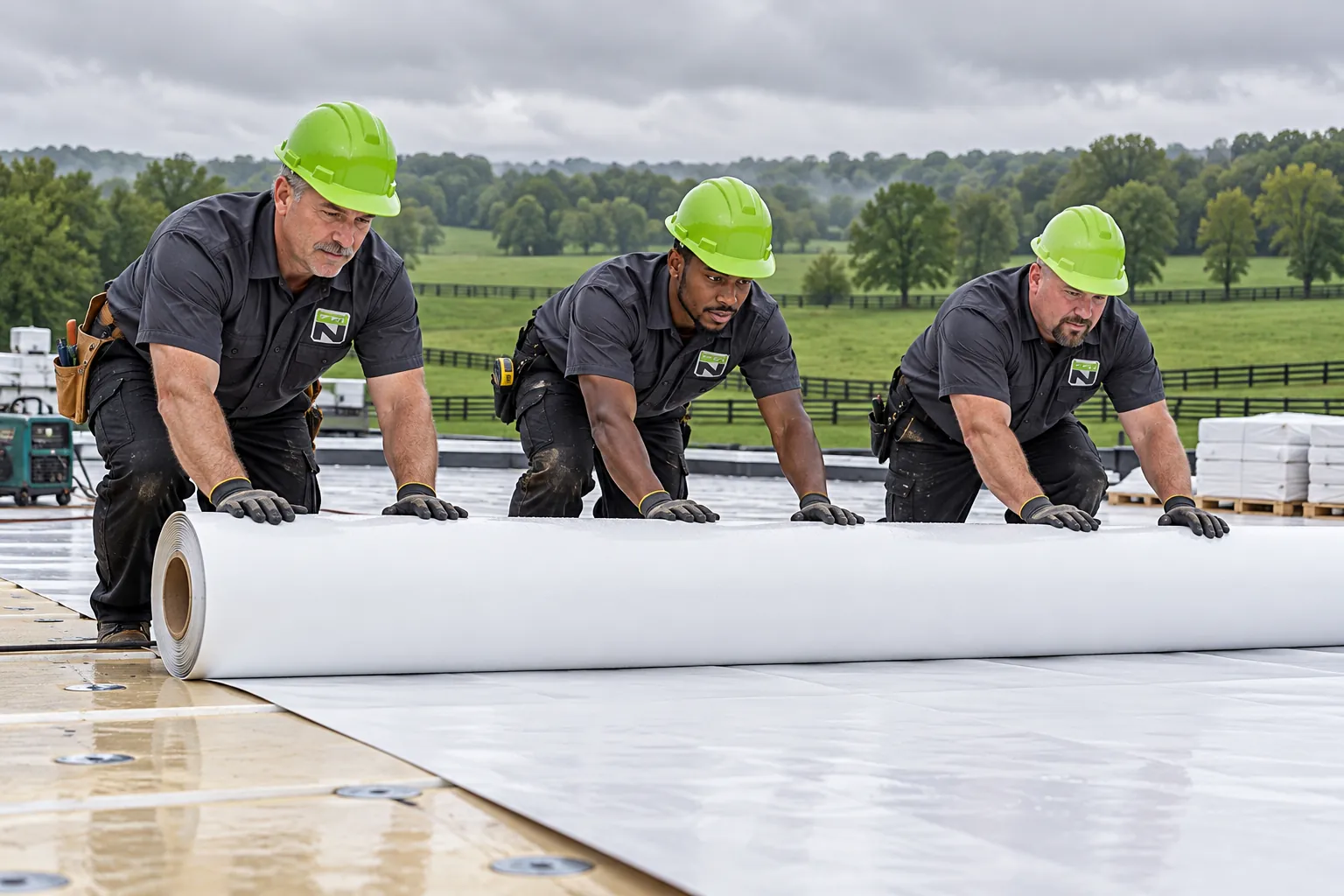
Mechanically Attached TPO
Screws and plates in the seam laps hold the sheet to steel decks, and large open warehouse roofs go down faster this way. Extra rows in the perimeter and corners handle uplift.
TPO Roofing · Nicholasville, KY
As a Nicholasville TPO roofing contractor, we install white heat-welded TPO on warehouses, retail strips, and offices, from tear-off through the last curb flashing.
Working as a Nicholasville TPO roofing contractor, we compare TPO with the two sheets owners ask about most before the scope is written.
A plain warehouse roof with few penetrations is the classic TPO job. A kitchen fan dripping grease calls for a PVC zone welded in around it.
TPO problems cluster at the details, so a roof walk checks these five zones before anyone talks about replacing the whole sheet.
Uplift starts at the corners. Loose termination bar, edge metal pulled off its cleat, and membrane shrinking away from the parapet base show where wind has been working.
A probe catches welds that skipped: narrow laps, wrinkles welded flat, and seams where dirt or dew got trapped. Open laps near a drain let water travel under the sheet.
Ponding rings around drains mean the slope under the sheet is wrong or the strainer is clogged. Standing water wears the white surface and hides small punctures.
Prefabricated corners that peel, boots split at the clamp, and flashing that stops short of the curb cap all let water in beside rooftop units.
Service techs crossing to the same unit every month scuff and puncture the sheet. Thicker membrane or walkway pads along that path take the wear instead.
Four ways to put TPO on a commercial roof, each matched to the deck, the wind exposure, and what the structure can carry.
Steel Decks
Screws and plates in the seam laps hold the sheet to steel decks, and large open warehouse roofs go down faster this way. Extra rows in the perimeter and corners handle uplift.
Wind-Exposed Roofs
Bonding adhesive across the whole sheet keeps it flat and quiet in wind, a good match for exposed edges and roofs crowded with curbs.
Fewer Lap Fasteners
Plates screwed to the deck under the sheet are fused to its underside with induction heat, so fasteners stay out of the laps.
One Dry Layer
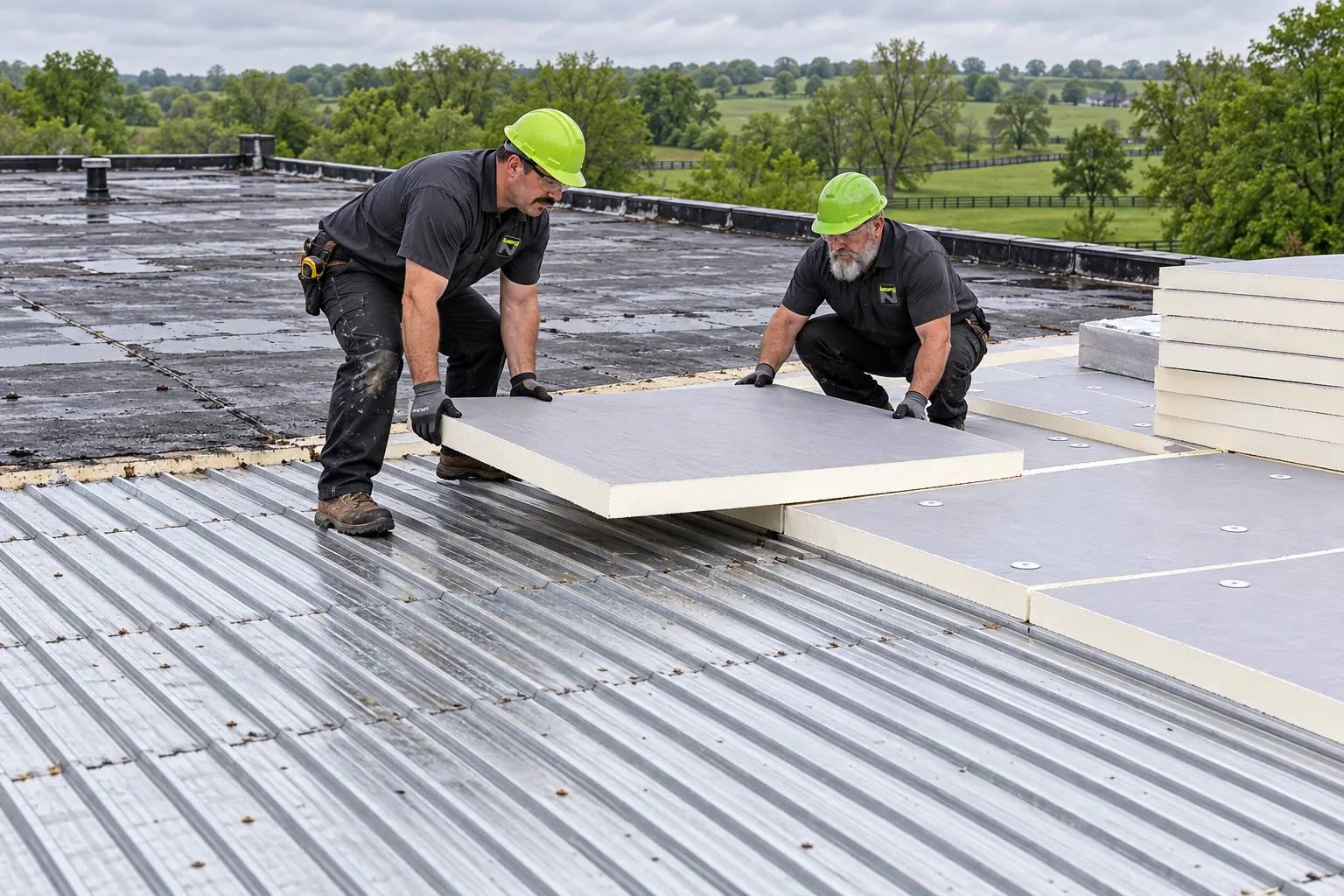
When core cuts show one existing layer with dry insulation, a cover board and new TPO go over it. Edge metal and curbs get raised for the added height.
Each benefit shows up at a specific part of the roof, and each one rides on welds and flashing done right.
Summer sun bounces off the weathering side instead of heating the deck, a real difference over offices and retail floors running their RTUs all season.
Hot-air welds fuse the laps into a single membrane, so there is no tape or adhesive at the seams to age out.
Tapered insulation under new TPO moves water off the low spots that wore out the old roof around its drains.
Curbs, pipe boots, and corners get prefabricated TPO pieces welded in place, replacing the cracked flashing where most old leaks began.
Sixty-mil sheet covers most replacements, and 80-mil goes where service techs walk to units every month or hail hits often.
A wind-lifted TPO lap lets water run under the sheet. Call and we will walk the roof, probe the seams, and reweld or patch what opened.
Five stages from the first core cut to the final weld probe on a TPO replacement.
Core cuts show the insulation and how many layers sit on the deck, and a moisture check maps any wet areas. The roof plan marks every curb, drain, and pipe the new TPO must wrap.
Wet areas are outlined on the plan before pricing.
Deck type, wind exposure, and the structure's weight limit decide between screws and plates, full adhesive, or induction-welded plates. Sheet thickness follows foot traffic and hail exposure.
Perimeter and corner fastening follows the uplift rating.
Old roofing comes off in sections closed up each evening, rusted deck is replaced, and insulation and cover board go down with staggered joints toward the drains.
Tapered boards go wherever the old roof ponded.
Rolls are laid out, lapped, and welded with a hot-air robot along the field, then hand-welded at corners. Dew and dirt get wiped off first so each weld fuses clean.
Each field seam is probed the shift it is welded.
Membrane wraps each RTU curb to its cap, corners and boots get welded in, and the top edge goes under counterflashing or termination bar. A final probe covers every curb and nearby lap.
Photos of each flashed curb go with the closeout.
Three services that often go with a TPO job on the same property.
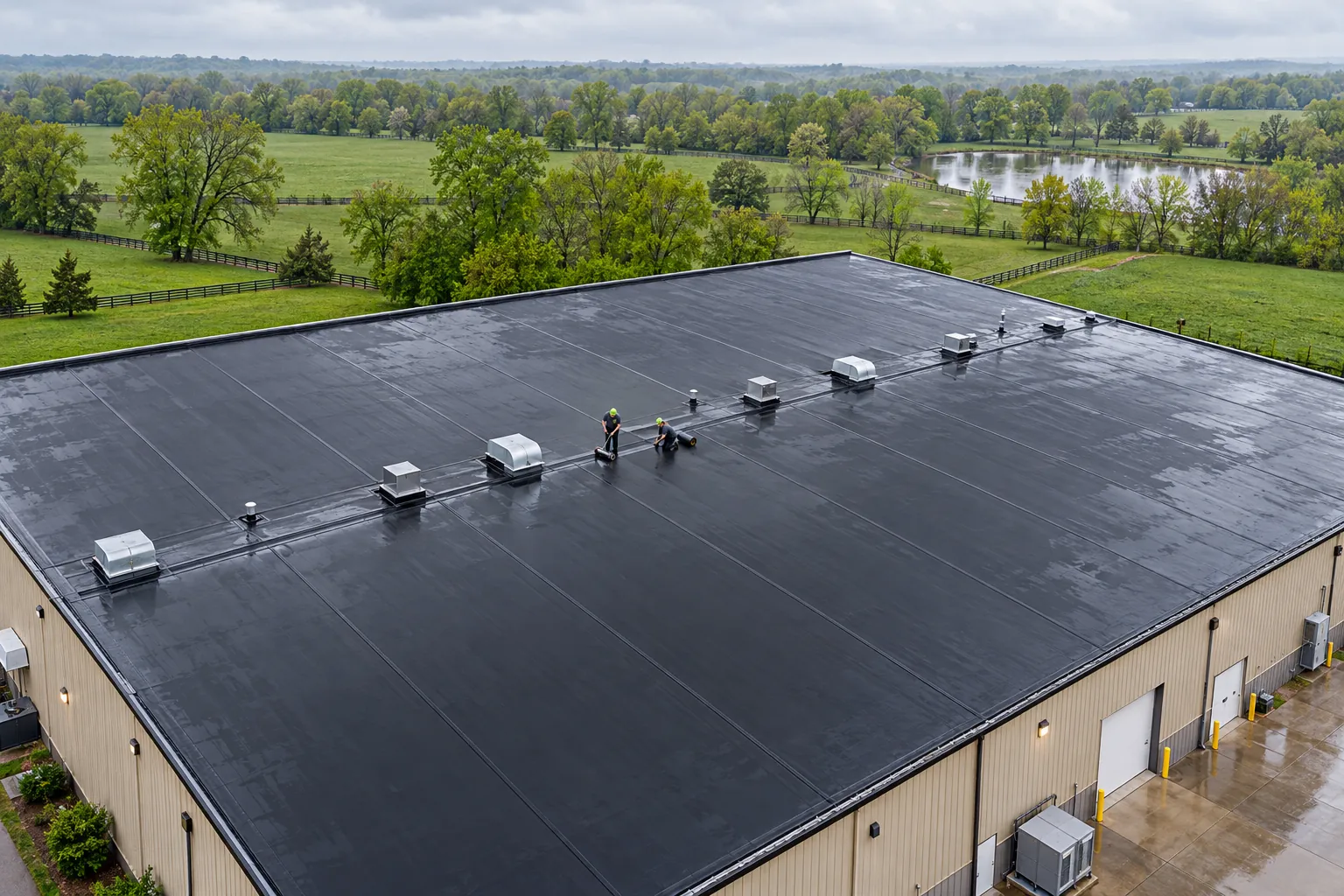
Matching an older rubber roof on an addition, or a black sheet over unheated storage where white TPO adds little.
EPDM roofing in Nicholasville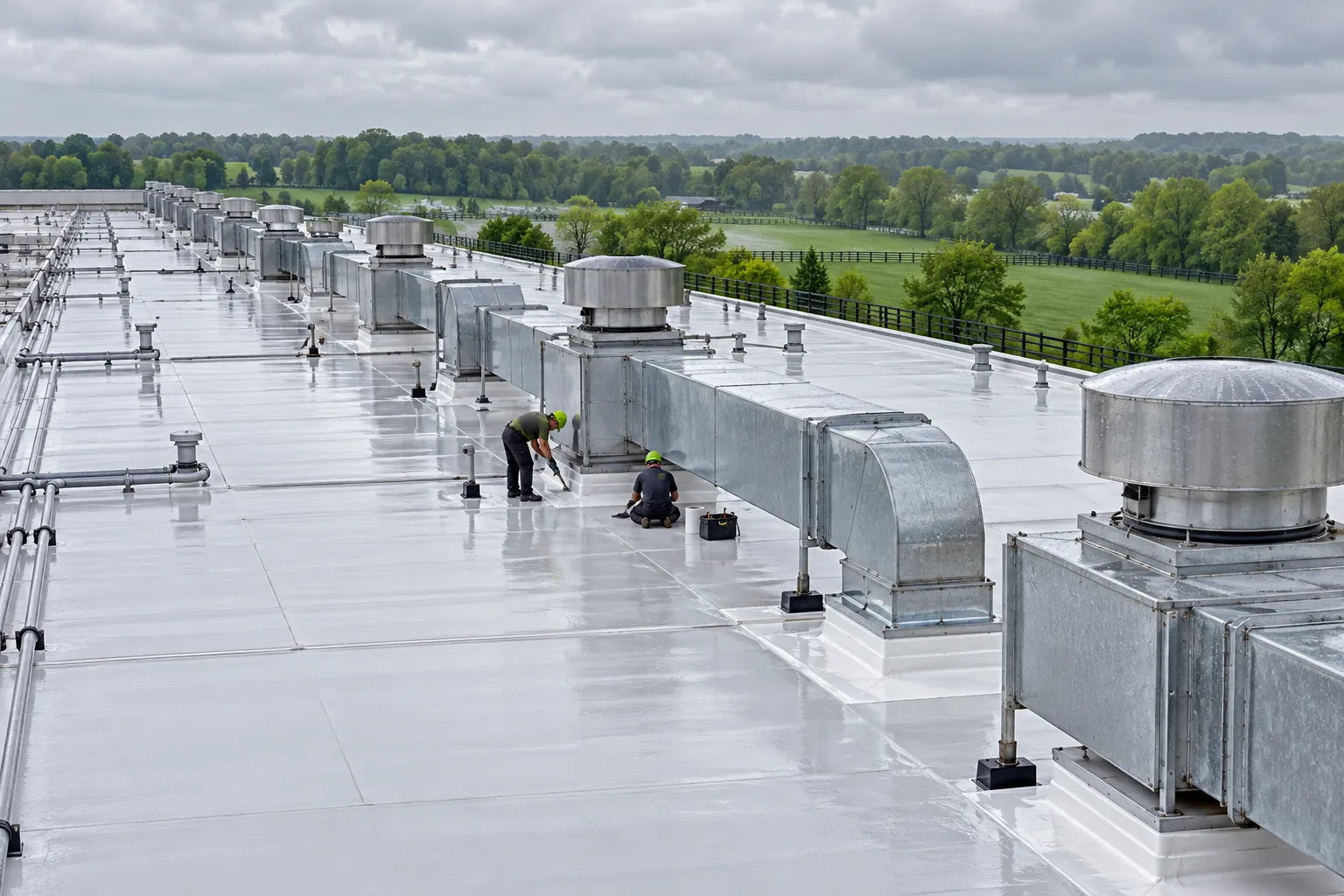
Plant roofs where exhaust fans call for a PVC zone tied into the main TPO field.
Industrial roofing in Nicholasville
Rewelding a lifted lap or replacing a split pipe boot on a TPO roof that still has years left.
Commercial roof repair in NicholasvilleTPO, short for thermoplastic polyolefin, is a single-ply membrane that comes in wide rolls and joins at heat-welded seams. Owners choose it for low-slope roofs because the welded laps fuse into one sheet and the white weathering side reflects summer sun. It goes over cover board or insulation on new buildings and replacements.
All three handle central Kentucky weather, so the choice turns on seams, color, and exposure. TPO suits a plain warehouse with few penetrations, EPDM matches an existing rubber roof or unheated storage, and PVC belongs near grease or chemical exhaust. A mixed roof can carry a PVC zone around a kitchen fan tied into a TPO field.
Sixty-mil is the usual pick, the 60 mil TPO membrane for a commercial roof with ordinary traffic. Forty-five mil shows up on tight budgets, and 80-mil fits roofs with monthly service traffic or regular hail. Cover board, fastener spacing, and weld quality matter as much as the sheet itself.
Deck type, wind exposure, and the structure's weight limit decide it. Mechanically attached sheets go down quickly on big steel decks, fully adhered sheets lie flat and quiet on wind-exposed edges, and induction-welded plates keep screws out of the laps. Ballast needs a structure rated for stone or pavers, which rules it out on many light steel buildings.
A hot-air welder melts the overlapping sheets into one, and a blunt probe checks each weld for gaps. At a rooftop unit, membrane wraps the curb to its cap, prefabricated corners get welded inside and out, and the top edge is fastened under counterflashing or termination bar before the curb and nearby seams are probed.
Yes, when core cuts show one roof layer with dry insulation. A cover board goes over the old surface, the new TPO is fastened or adhered on top, and edge metal and curbs are raised to clear the added height. Wet insulation or a second existing layer sends the job to tear-off.
Send the roof's address and what you are seeing. The first visit covers core cuts, seam checks, and a written TPO scope.
Or call (270) 249-6474
Want a call back about your roof?
Leave a name and number, or call (270) 249-6474 now.