
Commercial Roof Repair
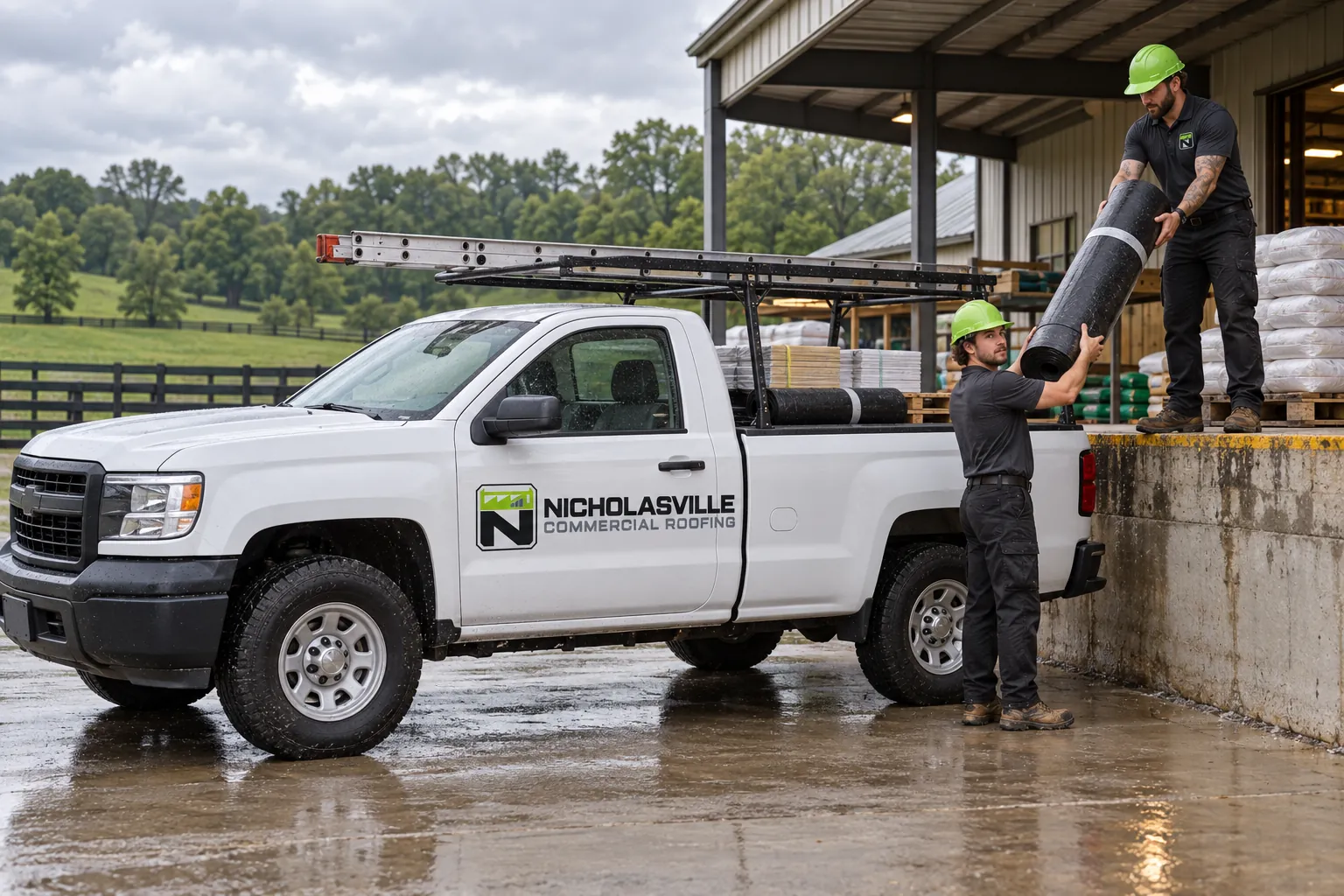
Leaks at one detail on a roof with years left get a repair. We trace water from the stain inside to the seam, curb, drain, or fastener letting it in, and fix it in the roof's own system.
Commercial roof repair
Our Services · Nicholasville, KY
We provide commercial roofing services in Nicholasville for repair, replacement, and new membrane or metal roofs on low-slope and steep-slope buildings.
Our commercial roofing services in Nicholasville cover six kinds of work, from one leaking seam to a new roof over a working plant.
Leaks at one detail on a roof with years left get a repair. We trace water from the stain inside to the seam, curb, drain, or fastener letting it in, and fix it in the roof's own system.
Commercial roof repair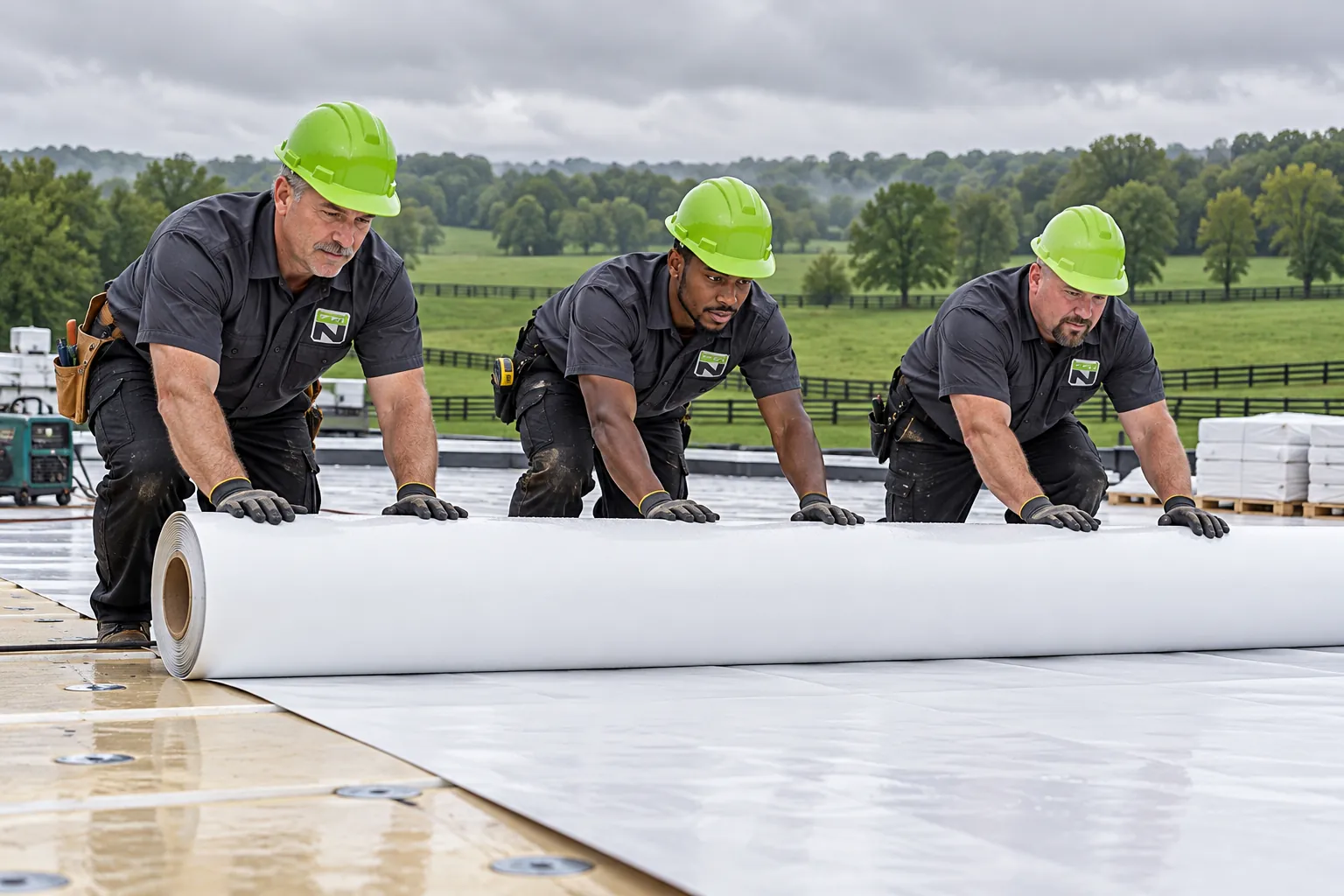
White TPO with heat-welded laps fits low-slope roofs over cooled space. The 60-mil sheet is the usual pick, attached by screws and plates, full adhesive, or induction-welded plates to suit the deck.
TPO roofing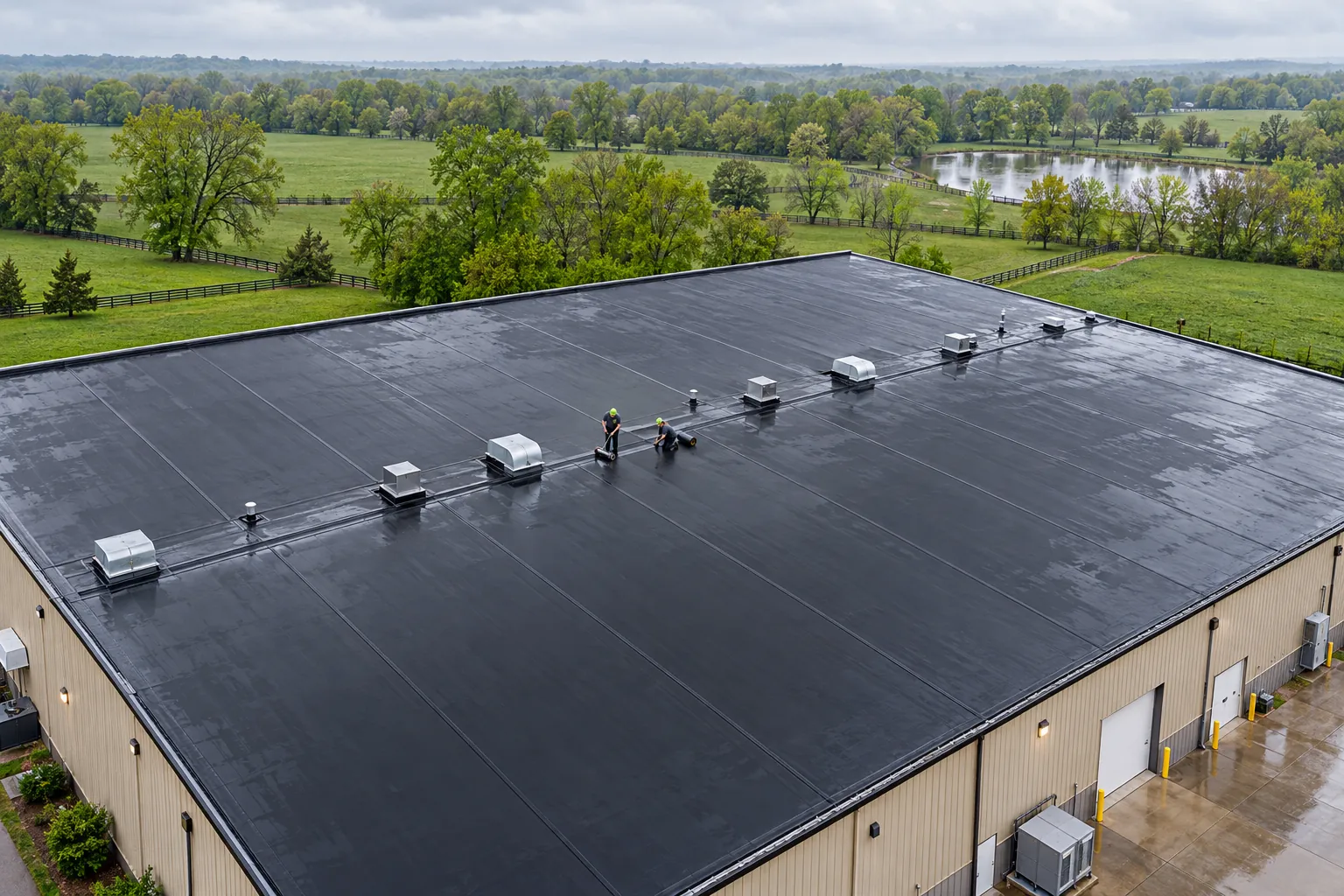
Rubber membrane stays flexible through freeze and thaw and matches older EPDM roofs. Seams are primed and taped, and a recover works over one dry roof layer.
EPDM roofing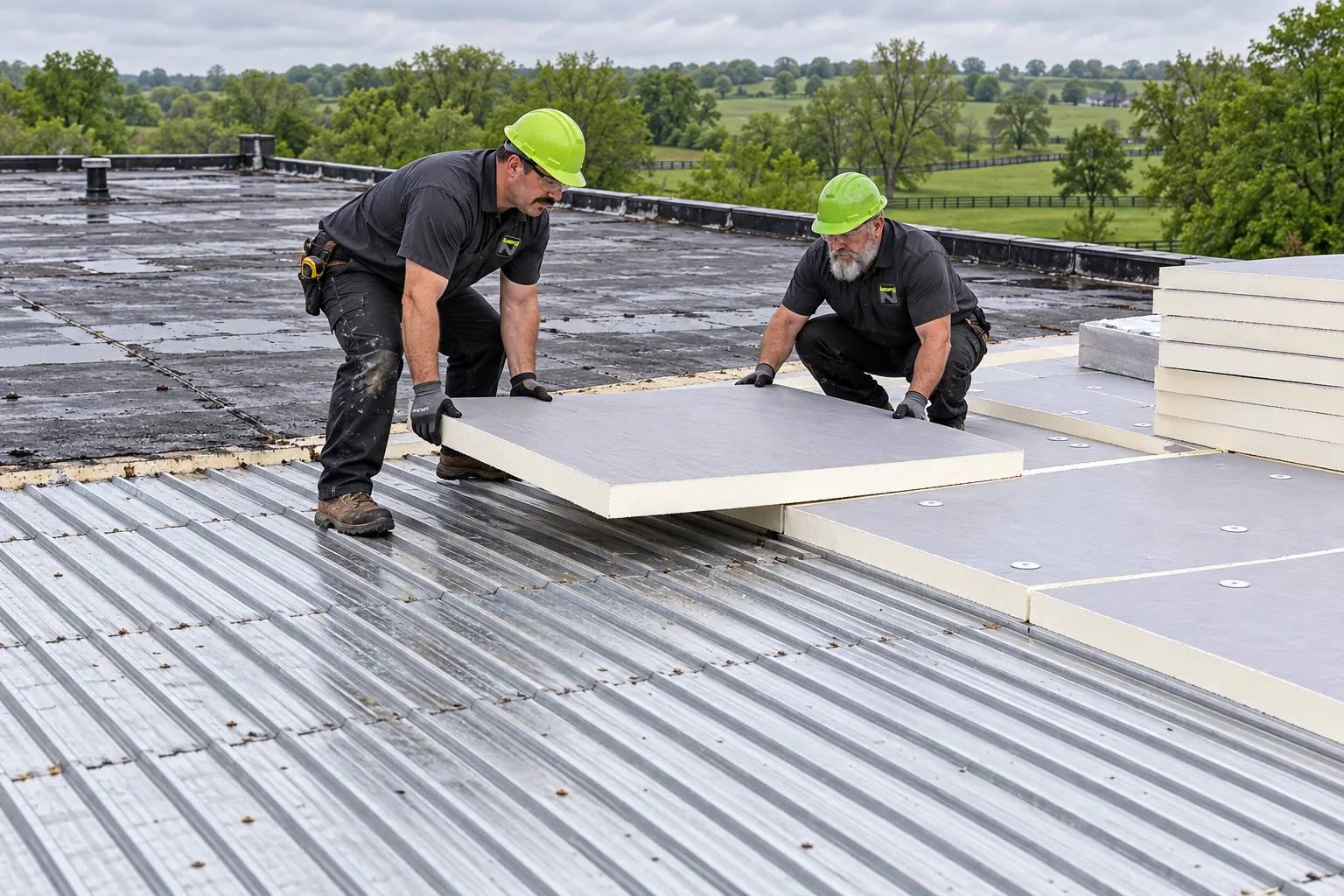
Ponding roofs get rebuilt around slope: tapered insulation, crickets behind curbs, and drains and scuppers reset to the new surface, with TPO or EPDM on top.
Flat roofing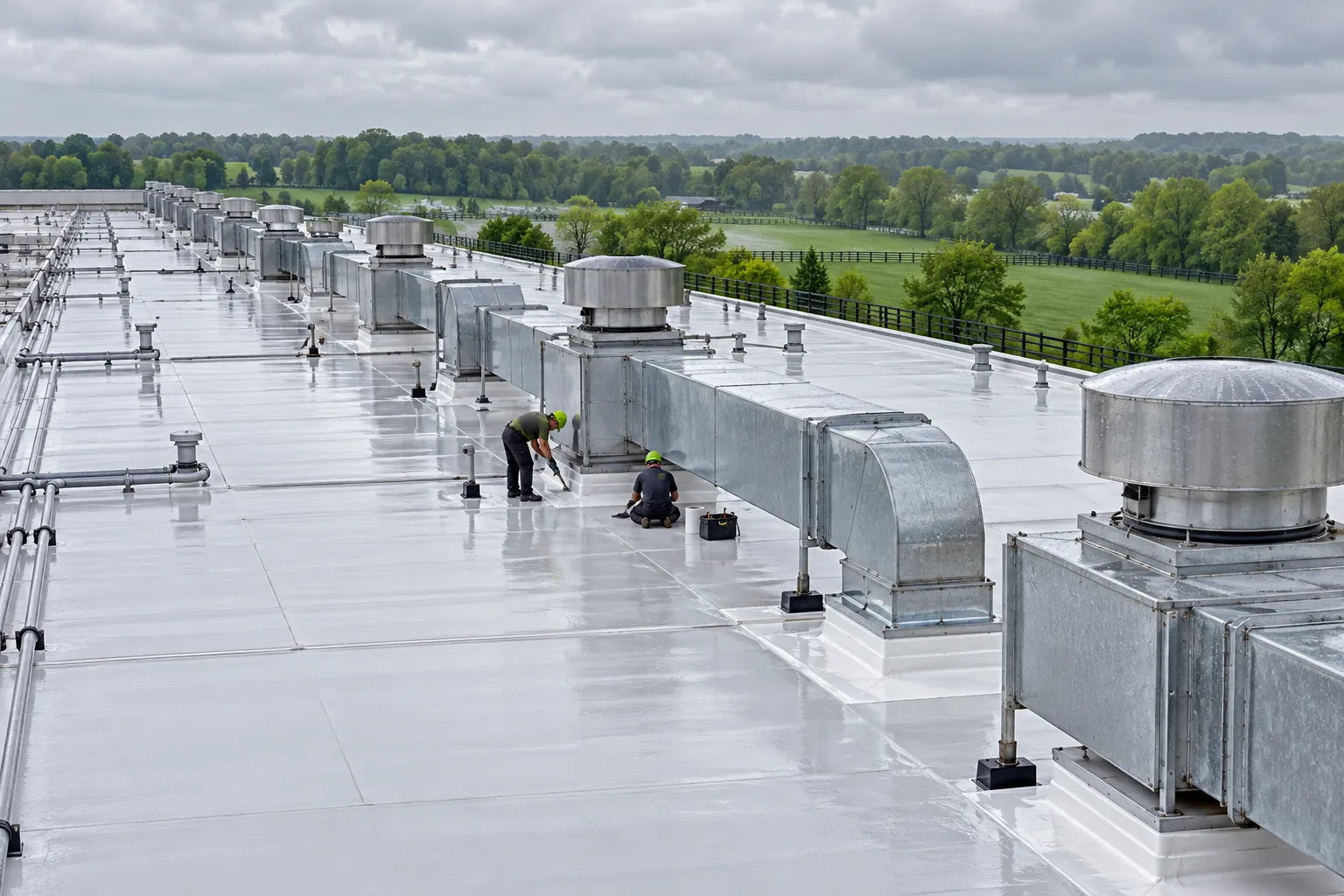
Plant roofs are replaced in sections dried in each evening, with resistant membrane at exhaust zones, walkway pads on service paths, and hatch rails reset.
Industrial roofing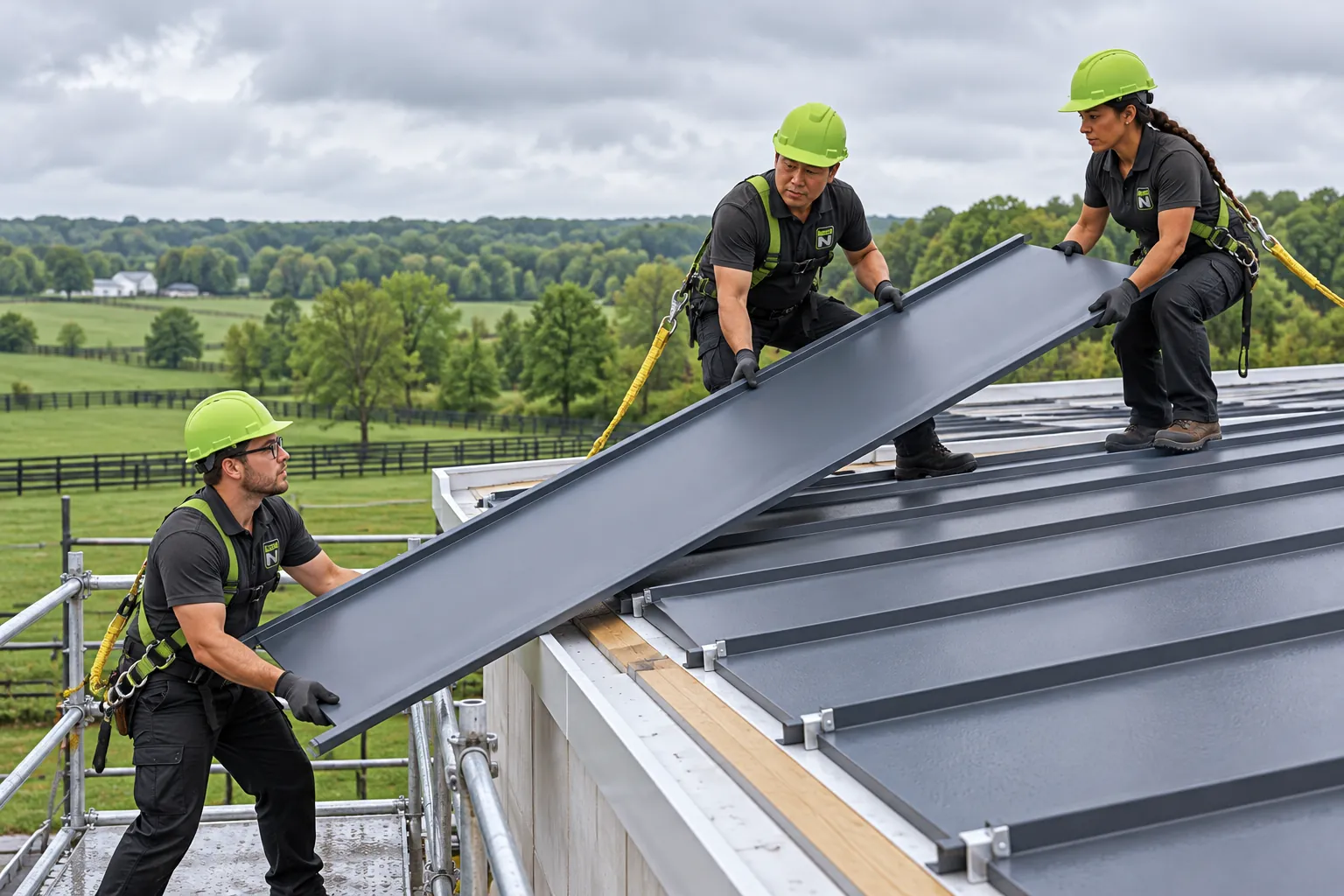
Standing seam and R-panel roofs are installed new, repaired at the fastener rows and laps, and checked after storms. Retrofit framing turns a ponding flat roof into a pitched one.
Commercial metal roofingSlope sorts most roofs before anything else. This comparison sets the three main system families side by side.
When one property has a low-slope warehouse and a pitched office wing, each section gets the system that matches its own slope.
Five decisions every commercial roof replacement works through, from the method to the morning the work starts.
Method
Tear-off removes the roof to the deck and shows every section of it; a recover adds insulation and membrane over one dry layer and saves disposal. Two existing layers or soaked insulation send the job to tear-off.
Deck
Once the old roof is off, rusted steel deck is replaced in sections and screwed to the joists, rotted wood deck is cut out and resheathed, and loose deck is refastened before new boards go down.
Curbs and Edges
Thicker insulation lifts the roof surface several inches, so curb extensions go under rooftop units, new edge metal and coping go on at the finished height, and drains and scuppers are reset.
Operations
Most businesses stay open. Tear-off noise is scheduled around quiet hours, units shut down in short sections with the HVAC contractor, and crane lifts happen early with parking rows coned off.
Before Day One
Move or cover stock under the roof, book the HVAC contractor for curb lifts, mark dumpster and crane spots on a lot sketch, and tell tenants which entrances close each day.
Storm damage starts at edges, laps, and soft spots. Call us and we will walk the roof, photograph what opened, and close it up.
The same five steps run under every service, scaled to the job.
A full walk with measurements, photos, and core cuts records the roof area, slope, layers, insulation moisture, and every drain, curb, skylight, and penetration.
Deck condition is checked from inside where ceilings allow.
Findings on the roof plan decide between fixing a detail, replacing a section, or replacing the whole roof, and which system fits each slope.
Upgrades are tied to photos from your roof.
The written scope lists the method, membrane or panels, insulation and cover board, edge metal, drains, and the staging plan for your building.
Permit details are added for the right office.
Work runs one roof section at a time, closed up each evening, with deck repairs, flashing, and edge details finished as each section goes on.
Inventory under each section gets covered.
Our final walk covers seams, curbs, drains, and edges, and the updated roof plan with photos goes to the owner.
Probed welds and checked laps go on the record.
Look at how far the damage spreads. A single leaking corner after a storm calls for a repair, while wet insulation, open seams, and deck damage across large areas call for replacement. Soft spots underfoot, membrane shrinking at the parapet, rusted deck at drains, and patches stacked on patches all lean toward a new roof.
Water speed. Low-slope roofs drain slowly across a nearly flat surface and need a continuous membrane such as TPO, EPDM, or modified bitumen; steep-slope roofs shed water fast enough for overlapping panels or shingles. Slope is measured in inches of rise per foot of run.
A full walk with measurements, photos, and core cuts. It records roof area, slope, and layers; insulation type, thickness, and moisture; seams, flashing, edge metal, and parapet caps; every drain, scupper, curb, skylight, and pipe; and the deck from inside where ceilings allow. Photos tie each finding to a spot on the roof plan.
Secured edge metal, a firm cover board, and extra fastening in the perimeter and corners, since wind and hail damage starts at edges and soft spots. Thicker membrane on exposed roofs and heavier-gauge, hail-rated metal panels help too. Ask for the assembly's wind uplift rating and check that the fastening pattern on the roof matches it.
On the right roof, yes. Tapered insulation pays off where water stands after rain, and thicker membrane pays off where service techs walk to units often or hail hits. Cover board on hail-exposed roofs and white membrane over cooled space follow the same logic. Ask for photos from your roof that justify each upgrade.
Tell us which roof and what it is doing. We start with a roof walk, core cuts, and a written scope for the job you need.
Or call (270) 249-6474
Want a call back about your roof?
Leave a name and number, or call (270) 249-6474 now.